Sbírka Atom Economy Formula Chemistry Zdarma
Sbírka Atom Economy Formula Chemistry Zdarma. The atom economy of a reaction shows how many of the atoms used in the reaction become the desired product. Chemical reactions involve the conversion of reactants or raw materials into products. The atom economy of a chemical reaction is calculated using the formula atom economy = mass of useful product / mass of products x 100 this effectively. Chemistry ideal of atom economy 5. Carbon monoxide is a waste gas.

Tady Savvy Chemist Gcse Ocr Gateway Chemistry C5 1i J Atom Economy
In addition reactions, the atom economy will always be 100%, because all of the atoms are. Write out the balanced equation. Efficient processes have high atom economies, and are important for sustainable development, as they use fewer natural resources and create less waste.The atom economy of a reaction is a measure of how many reactant atoms.
Efficient processes have high atom economies, and are important for sustainable development, as they use fewer natural resources and create less waste. This figure drops to just 22% (0.86 × 0.26 × 100) when taking into account the percentage yield for the reaction. % atom economy = (fw of atoms utilized/fw of all reactants) x 100 = (137/275) x 100 = 50%. 26.07.2020 · learn about and revise atom economy, percentage yield and gas calculations with this bbc bitesize gcse chemistry (aqa) study guide. The atom economy of a chemical reaction is calculated using the formula atom economy = mass of useful product / mass of products x 100 this effectively. Chemical reactions involve the conversion of reactants or raw materials into products. The atom economy of a reaction shows how many of the atoms used in the reaction become the desired product.

Inefficient, wasteful processes have low atom economies. This figure drops to just 22% (0.86 × 0.26 × 100) when taking into account the percentage yield for the reaction. Table 4 experimental atom economy of equation 1: 26.07.2020 · learn about and revise atom economy, percentage yield and gas calculations with this bbc bitesize gcse chemistry (aqa) study guide. Write out the balanced equation. 26.07.2020 · in this reaction, carbon and oxygen atoms in the reactants do not form the useful product. 08.01.2018 · percentage atom economy formula. How to calculate atom economy step 1. It is found directly from the balanced equation by calculating the mr of the desired product.

Calculate the relative molecular mass of each of the products. How to calculate atom economy step 1. Based on actual quantities of. Efficient processes have high atom economies, and are important for sustainable development, as they use fewer natural resources and create less waste. Green chemists define atom economy as: Table 4 experimental atom economy of equation 1: Chemistry ideal of atom economy 5.. In addition reactions, the atom economy will always be 100%, because all of the atoms are.

The atom economy of a reaction shows how many of the atoms used in the reaction become the desired product. Based on actual quantities of. 26.07.2020 · in this reaction, carbon and oxygen atoms in the reactants do not form the useful product. The atom economy of a reaction shows how many of the atoms used in the reaction become the desired product. Carbon monoxide is a waste gas. Efficient processes have high atom economies, and are important for sustainable development, as they use fewer natural resources and create less waste. It is found directly from the balanced equation by calculating the mr of the desired product. Table 4 experimental atom economy of equation 1: The atom economy of a reaction is a measure of how many reactant atoms.. How to calculate atom economy step 1.

Table 4 experimental atom economy of equation 1:. In addition reactions, the atom economy will always be 100%, because all of the atoms are. This figure drops to just 22% (0.86 × 0.26 × 100) when taking into account the percentage yield for the reaction. Write out the balanced equation. Applying the formula to the data constructed in table 1 results in an atom economy of only 26% for the wittig reaction. The rest of the atoms or mass is wasted. 26.07.2020 · in this reaction, carbon and oxygen atoms in the reactants do not form the useful product. Table 4 experimental atom economy of equation 1: % atom economy = (fw of atoms utilized/fw of all reactants) x 100 = (137/275) x 100 = 50%. Carbon monoxide is a waste gas. Inefficient, wasteful processes have low atom economies. Table 4 experimental atom economy of equation 1:

Green chemists define atom economy as: Calculate the relative molecular mass of each of the products. Efficient processes have high atom economies, and are important for sustainable development, as they use fewer natural resources and create less waste. The rest of the atoms or mass is wasted. The atom economy of a chemical reaction is a measure of the amount of starting materials that become useful products. 08.01.2018 · percentage atom economy formula. Carbon monoxide is a waste gas. Chemistry ideal of atom economy 5. How to calculate atom economy step 1. Table 4 experimental atom economy of equation 1: In addition reactions, the atom economy will always be 100%, because all of the atoms are... The rest of the atoms or mass is wasted.

26.07.2020 · learn about and revise atom economy, percentage yield and gas calculations with this bbc bitesize gcse chemistry (aqa) study guide. Write out the balanced equation. Table 4 experimental atom economy of equation 1: 26.07.2020 · learn about and revise atom economy, percentage yield and gas calculations with this bbc bitesize gcse chemistry (aqa) study guide. Carbon monoxide is a waste gas. Green chemists define atom economy as: 08.01.2018 · percentage atom economy formula. Chemistry ideal of atom economy 5. The atom economy of a chemical reaction is calculated using the formula atom economy = mass of useful product / mass of products x 100 this effectively. Efficient processes have high atom economies, and are important for sustainable development, as they use fewer natural resources and create less waste. Calculate the relative molecular mass of each of the products.. 26.07.2020 · in this reaction, carbon and oxygen atoms in the reactants do not form the useful product.

Write out the balanced equation. Write out the balanced equation. Applying the formula to the data constructed in table 1 results in an atom economy of only 26% for the wittig reaction. Carbon monoxide is a waste gas. Efficient processes have high atom economies, and are important for sustainable development, as they use fewer natural resources and create less waste. Inefficient, wasteful processes have low atom economies. 26.07.2020 · in this reaction, carbon and oxygen atoms in the reactants do not form the useful product.. Efficient processes have high atom economies, and are important for sustainable development, as they use fewer natural resources and create less waste.

08.01.2018 · percentage atom economy formula. Calculate the relative molecular mass of each of the products. Inefficient, wasteful processes have low atom economies. The atom economy of a reaction shows how many of the atoms used in the reaction become the desired product. Applying the formula to the data constructed in table 1 results in an atom economy of only 26% for the wittig reaction. % atom economy = (fw of atoms utilized/fw of all reactants) x 100 = (137/275) x 100 = 50%. Green chemists define atom economy as: It is found directly from the balanced equation by calculating the mr of the desired product. Table 1 wittig reaction atom economy reactants utilised not utilised formula This figure drops to just 22% (0.86 × 0.26 × 100) when taking into account the percentage yield for the reaction.. The atom economy of a reaction is a measure of how many reactant atoms.

The atom economy of a chemical reaction is calculated using the formula atom economy = mass of useful product / mass of products x 100 this effectively. Green chemists define atom economy as: 26.07.2020 · in this reaction, carbon and oxygen atoms in the reactants do not form the useful product. % atom economy = (fw of atoms utilized/fw of all reactants) x 100 = (137/275) x 100 = 50%.

The atom economy of a reaction shows how many of the atoms used in the reaction become the desired product. . Based on actual quantities of.

Calculate the relative molecular mass of each of the products. Efficient processes have high atom economies, and are important for sustainable development, as they use fewer natural resources and create less waste. Calculate the relative molecular mass of each of the products. % atom economy = (fw of atoms utilized/fw of all reactants) x 100 = (137/275) x 100 = 50%. Write out the balanced equation. The atom economy of a reaction is a measure of how many reactant atoms. How to calculate atom economy step 1. The rest of the atoms or mass is wasted.

08.01.2018 · percentage atom economy formula. Calculate the relative molecular mass of each of the products. 26.07.2020 · in this reaction, carbon and oxygen atoms in the reactants do not form the useful product. 26.07.2020 · learn about and revise atom economy, percentage yield and gas calculations with this bbc bitesize gcse chemistry (aqa) study guide. The atom economy of a reaction shows how many of the atoms used in the reaction become the desired product. At the very base of a chemical reaction, there are atoms … Table 4 experimental atom economy of equation 1: 08.01.2018 · percentage atom economy formula. Write out the balanced equation. Carbon monoxide is a waste gas. The atom economy of a reaction shows how many of the atoms used in the reaction become the desired product.

Table 4 experimental atom economy of equation 1:.. The atom economy of a reaction shows how many of the atoms used in the reaction become the desired product. Green chemists define atom economy as:. The atom economy of a chemical reaction is calculated using the formula atom economy = mass of useful product / mass of products x 100 this effectively.

Carbon monoxide is a waste gas. Write out the balanced equation. The atom economy of a chemical reaction is calculated using the formula atom economy = mass of useful product / mass of products x 100 this effectively. 26.07.2020 · learn about and revise atom economy, percentage yield and gas calculations with this bbc bitesize gcse chemistry (aqa) study guide. At the very base of a chemical reaction, there are atoms … 08.01.2018 · percentage atom economy formula. Table 4 experimental atom economy of equation 1: Applying the formula to the data constructed in table 1 results in an atom economy of only 26% for the wittig reaction. Chemical reactions involve the conversion of reactants or raw materials into products. It is found directly from the balanced equation by calculating the mr of the desired product. Green chemists define atom economy as:

This figure drops to just 22% (0.86 × 0.26 × 100) when taking into account the percentage yield for the reaction.. . Efficient processes have high atom economies, and are important for sustainable development, as they use fewer natural resources and create less waste.

Inefficient, wasteful processes have low atom economies... Calculate the relative molecular mass of each of the products. At the very base of a chemical reaction, there are atoms … 08.01.2018 · percentage atom economy formula. Carbon monoxide is a waste gas. % atom economy = (fw of atoms utilized/fw of all reactants) x 100 = (137/275) x 100 = 50%. 26.07.2020 · learn about and revise atom economy, percentage yield and gas calculations with this bbc bitesize gcse chemistry (aqa) study guide.. The atom economy of a chemical reaction is calculated using the formula atom economy = mass of useful product / mass of products x 100 this effectively.

At the very base of a chemical reaction, there are atoms …. Table 4 experimental atom economy of equation 1:

08.01.2018 · percentage atom economy formula. The rest of the atoms or mass is wasted... The atom economy of a reaction shows how many of the atoms used in the reaction become the desired product.

The atom economy of a chemical reaction is calculated using the formula atom economy = mass of useful product / mass of products x 100 this effectively. At the very base of a chemical reaction, there are atoms … In addition reactions, the atom economy will always be 100%, because all of the atoms are. Write out the balanced equation. Inefficient, wasteful processes have low atom economies. Chemical reactions involve the conversion of reactants or raw materials into products. Efficient processes have high atom economies, and are important for sustainable development, as they use fewer natural resources and create less waste. It is found directly from the balanced equation by calculating the mr of the desired product. Based on actual quantities of. The atom economy of a reaction shows how many of the atoms used in the reaction become the desired product.. Write out the balanced equation.

Calculate the relative molecular mass of each of the products. Table 1 wittig reaction atom economy reactants utilised not utilised formula This figure drops to just 22% (0.86 × 0.26 × 100) when taking into account the percentage yield for the reaction. The atom economy of a reaction is a measure of how many reactant atoms. At the very base of a chemical reaction, there are atoms … In addition reactions, the atom economy will always be 100%, because all of the atoms are. Carbon monoxide is a waste gas. Write out the balanced equation. Chemistry ideal of atom economy 5. Green chemists define atom economy as: 08.01.2018 · percentage atom economy formula.

Carbon monoxide is a waste gas. Efficient processes have high atom economies, and are important for sustainable development, as they use fewer natural resources and create less waste. Inefficient, wasteful processes have low atom economies. In addition reactions, the atom economy will always be 100%, because all of the atoms are. The atom economy of a chemical reaction is a measure of the amount of starting materials that become useful products. Write out the balanced equation. This figure drops to just 22% (0.86 × 0.26 × 100) when taking into account the percentage yield for the reaction. Applying the formula to the data constructed in table 1 results in an atom economy of only 26% for the wittig reaction. The atom economy of a chemical reaction is a measure of the amount of starting materials that become useful products.

Chemical reactions involve the conversion of reactants or raw materials into products. The rest of the atoms or mass is wasted. It is found directly from the balanced equation by calculating the mr of the desired product. Inefficient, wasteful processes have low atom economies. At the very base of a chemical reaction, there are atoms …

Efficient processes have high atom economies, and are important for sustainable development, as they use fewer natural resources and create less waste. Efficient processes have high atom economies, and are important for sustainable development, as they use fewer natural resources and create less waste. The atom economy of a chemical reaction is a measure of the amount of starting materials that become useful products. Inefficient, wasteful processes have low atom economies. Green chemists define atom economy as: Table 4 experimental atom economy of equation 1: Chemistry ideal of atom economy 5. This figure drops to just 22% (0.86 × 0.26 × 100) when taking into account the percentage yield for the reaction. Carbon monoxide is a waste gas. Calculate the relative molecular mass of each of the products.

This figure drops to just 22% (0.86 × 0.26 × 100) when taking into account the percentage yield for the reaction... Chemical reactions involve the conversion of reactants or raw materials into products.. The atom economy of a chemical reaction is calculated using the formula atom economy = mass of useful product / mass of products x 100 this effectively.

Write out the balanced equation. This figure drops to just 22% (0.86 × 0.26 × 100) when taking into account the percentage yield for the reaction. 08.01.2018 · percentage atom economy formula. Write out the balanced equation... The atom economy of a reaction is a measure of how many reactant atoms.

Applying the formula to the data constructed in table 1 results in an atom economy of only 26% for the wittig reaction.. Inefficient, wasteful processes have low atom economies. The atom economy of a chemical reaction is a measure of the amount of starting materials that become useful products. Chemical reactions involve the conversion of reactants or raw materials into products. The atom economy of a reaction shows how many of the atoms used in the reaction become the desired product. At the very base of a chemical reaction, there are atoms … Table 1 wittig reaction atom economy reactants utilised not utilised formula 26.07.2020 · learn about and revise atom economy, percentage yield and gas calculations with this bbc bitesize gcse chemistry (aqa) study guide. In addition reactions, the atom economy will always be 100%, because all of the atoms are. In addition reactions, the atom economy will always be 100%, because all of the atoms are.

The atom economy of a chemical reaction is calculated using the formula atom economy = mass of useful product / mass of products x 100 this effectively. In addition reactions, the atom economy will always be 100%, because all of the atoms are. Table 4 experimental atom economy of equation 1: Inefficient, wasteful processes have low atom economies. Green chemists define atom economy as: 26.07.2020 · learn about and revise atom economy, percentage yield and gas calculations with this bbc bitesize gcse chemistry (aqa) study guide. Carbon monoxide is a waste gas. Table 1 wittig reaction atom economy reactants utilised not utilised formula It is found directly from the balanced equation by calculating the mr of the desired product. Based on actual quantities of. At the very base of a chemical reaction, there are atoms …. 26.07.2020 · in this reaction, carbon and oxygen atoms in the reactants do not form the useful product.

Chemistry ideal of atom economy 5... 26.07.2020 · learn about and revise atom economy, percentage yield and gas calculations with this bbc bitesize gcse chemistry (aqa) study guide. The atom economy of a reaction is a measure of how many reactant atoms. Table 1 wittig reaction atom economy reactants utilised not utilised formula At the very base of a chemical reaction, there are atoms … It is found directly from the balanced equation by calculating the mr of the desired product. % atom economy = (fw of atoms utilized/fw of all reactants) x 100 = (137/275) x 100 = 50%. Calculate the relative molecular mass of each of the products. Table 4 experimental atom economy of equation 1: In addition reactions, the atom economy will always be 100%, because all of the atoms are.. Chemistry ideal of atom economy 5.

08.01.2018 · percentage atom economy formula. 26.07.2020 · in this reaction, carbon and oxygen atoms in the reactants do not form the useful product. % atom economy = (fw of atoms utilized/fw of all reactants) x 100 = (137/275) x 100 = 50%. Efficient processes have high atom economies, and are important for sustainable development, as they use fewer natural resources and create less waste. % atom economy = (fw of atoms utilized/fw of all reactants) x 100 = (137/275) x 100 = 50%.

How to calculate atom economy step 1. Based on actual quantities of. Table 4 experimental atom economy of equation 1: This figure drops to just 22% (0.86 × 0.26 × 100) when taking into account the percentage yield for the reaction. How to calculate atom economy step 1. The atom economy of a chemical reaction is calculated using the formula atom economy = mass of useful product / mass of products x 100 this effectively. 26.07.2020 · in this reaction, carbon and oxygen atoms in the reactants do not form the useful product. % atom economy = (fw of atoms utilized/fw of all reactants) x 100 = (137/275) x 100 = 50%. At the very base of a chemical reaction, there are atoms … Carbon monoxide is a waste gas. The rest of the atoms or mass is wasted.

Efficient processes have high atom economies, and are important for sustainable development, as they use fewer natural resources and create less waste... Table 1 wittig reaction atom economy reactants utilised not utilised formula The atom economy of a chemical reaction is a measure of the amount of starting materials that become useful products. The atom economy of a reaction shows how many of the atoms used in the reaction become the desired product. 26.07.2020 · in this reaction, carbon and oxygen atoms in the reactants do not form the useful product. 26.07.2020 · learn about and revise atom economy, percentage yield and gas calculations with this bbc bitesize gcse chemistry (aqa) study guide. 08.01.2018 · percentage atom economy formula. % atom economy = (fw of atoms utilized/fw of all reactants) x 100 = (137/275) x 100 = 50%.

The rest of the atoms or mass is wasted.. The atom economy of a reaction shows how many of the atoms used in the reaction become the desired product.. Chemistry ideal of atom economy 5.

The atom economy of a chemical reaction is a measure of the amount of starting materials that become useful products. In addition reactions, the atom economy will always be 100%, because all of the atoms are. The atom economy of a chemical reaction is a measure of the amount of starting materials that become useful products.. In addition reactions, the atom economy will always be 100%, because all of the atoms are.

Efficient processes have high atom economies, and are important for sustainable development, as they use fewer natural resources and create less waste. 26.07.2020 · learn about and revise atom economy, percentage yield and gas calculations with this bbc bitesize gcse chemistry (aqa) study guide. It is found directly from the balanced equation by calculating the mr of the desired product. 26.07.2020 · in this reaction, carbon and oxygen atoms in the reactants do not form the useful product. The atom economy of a reaction is a measure of how many reactant atoms. Write out the balanced equation. Table 1 wittig reaction atom economy reactants utilised not utilised formula Based on actual quantities of. At the very base of a chemical reaction, there are atoms … Inefficient, wasteful processes have low atom economies. The atom economy of a reaction shows how many of the atoms used in the reaction become the desired product.

08.01.2018 · percentage atom economy formula. It is found directly from the balanced equation by calculating the mr of the desired product. This figure drops to just 22% (0.86 × 0.26 × 100) when taking into account the percentage yield for the reaction. At the very base of a chemical reaction, there are atoms …

Green chemists define atom economy as: How to calculate atom economy step 1. The atom economy of a reaction shows how many of the atoms used in the reaction become the desired product. 26.07.2020 · learn about and revise atom economy, percentage yield and gas calculations with this bbc bitesize gcse chemistry (aqa) study guide. Inefficient, wasteful processes have low atom economies. It is found directly from the balanced equation by calculating the mr of the desired product.. Chemical reactions involve the conversion of reactants or raw materials into products.

08.01.2018 · percentage atom economy formula. Carbon monoxide is a waste gas.

In addition reactions, the atom economy will always be 100%, because all of the atoms are.. The atom economy of a chemical reaction is a measure of the amount of starting materials that become useful products. Applying the formula to the data constructed in table 1 results in an atom economy of only 26% for the wittig reaction. Chemical reactions involve the conversion of reactants or raw materials into products.. The rest of the atoms or mass is wasted.

How to calculate atom economy step 1.. Chemical reactions involve the conversion of reactants or raw materials into products. Chemistry ideal of atom economy 5. Green chemists define atom economy as: Table 1 wittig reaction atom economy reactants utilised not utilised formula Table 4 experimental atom economy of equation 1: Carbon monoxide is a waste gas. In addition reactions, the atom economy will always be 100%, because all of the atoms are. This figure drops to just 22% (0.86 × 0.26 × 100) when taking into account the percentage yield for the reaction. Write out the balanced equation. The atom economy of a reaction is a measure of how many reactant atoms. The atom economy of a chemical reaction is calculated using the formula atom economy = mass of useful product / mass of products x 100 this effectively.

Calculate the relative molecular mass of each of the products. Inefficient, wasteful processes have low atom economies. At the very base of a chemical reaction, there are atoms …. Efficient processes have high atom economies, and are important for sustainable development, as they use fewer natural resources and create less waste.

08.01.2018 · percentage atom economy formula. Write out the balanced equation. It is found directly from the balanced equation by calculating the mr of the desired product. 26.07.2020 · learn about and revise atom economy, percentage yield and gas calculations with this bbc bitesize gcse chemistry (aqa) study guide. Chemistry ideal of atom economy 5. How to calculate atom economy step 1. Applying the formula to the data constructed in table 1 results in an atom economy of only 26% for the wittig reaction. The atom economy of a reaction shows how many of the atoms used in the reaction become the desired product. Table 4 experimental atom economy of equation 1: The atom economy of a reaction is a measure of how many reactant atoms... In addition reactions, the atom economy will always be 100%, because all of the atoms are.

The rest of the atoms or mass is wasted. .. The atom economy of a reaction shows how many of the atoms used in the reaction become the desired product.

26.07.2020 · learn about and revise atom economy, percentage yield and gas calculations with this bbc bitesize gcse chemistry (aqa) study guide... 26.07.2020 · learn about and revise atom economy, percentage yield and gas calculations with this bbc bitesize gcse chemistry (aqa) study guide. The atom economy of a chemical reaction is a measure of the amount of starting materials that become useful products. Green chemists define atom economy as: Calculate the relative molecular mass of each of the products.. It is found directly from the balanced equation by calculating the mr of the desired product.

In addition reactions, the atom economy will always be 100%, because all of the atoms are. Table 1 wittig reaction atom economy reactants utilised not utilised formula The atom economy of a chemical reaction is calculated using the formula atom economy = mass of useful product / mass of products x 100 this effectively. Inefficient, wasteful processes have low atom economies. Green chemists define atom economy as:. Based on actual quantities of.

At the very base of a chemical reaction, there are atoms … Table 1 wittig reaction atom economy reactants utilised not utilised formula Green chemists define atom economy as: How to calculate atom economy step 1.

Chemical reactions involve the conversion of reactants or raw materials into products... Chemical reactions involve the conversion of reactants or raw materials into products. 26.07.2020 · in this reaction, carbon and oxygen atoms in the reactants do not form the useful product. 26.07.2020 · learn about and revise atom economy, percentage yield and gas calculations with this bbc bitesize gcse chemistry (aqa) study guide.

It is found directly from the balanced equation by calculating the mr of the desired product.. It is found directly from the balanced equation by calculating the mr of the desired product. Calculate the relative molecular mass of each of the products. Carbon monoxide is a waste gas. This figure drops to just 22% (0.86 × 0.26 × 100) when taking into account the percentage yield for the reaction. 08.01.2018 · percentage atom economy formula. 26.07.2020 · learn about and revise atom economy, percentage yield and gas calculations with this bbc bitesize gcse chemistry (aqa) study guide. Inefficient, wasteful processes have low atom economies. 26.07.2020 · in this reaction, carbon and oxygen atoms in the reactants do not form the useful product. Table 4 experimental atom economy of equation 1: Efficient processes have high atom economies, and are important for sustainable development, as they use fewer natural resources and create less waste. At the very base of a chemical reaction, there are atoms …

At the very base of a chemical reaction, there are atoms … % atom economy = (fw of atoms utilized/fw of all reactants) x 100 = (137/275) x 100 = 50%. It is found directly from the balanced equation by calculating the mr of the desired product. Applying the formula to the data constructed in table 1 results in an atom economy of only 26% for the wittig reaction.

The atom economy of a chemical reaction is calculated using the formula atom economy = mass of useful product / mass of products x 100 this effectively... Green chemists define atom economy as: Table 1 wittig reaction atom economy reactants utilised not utilised formula Chemistry ideal of atom economy 5. The atom economy of a reaction is a measure of how many reactant atoms. Chemical reactions involve the conversion of reactants or raw materials into products. % atom economy = (fw of atoms utilized/fw of all reactants) x 100 = (137/275) x 100 = 50%. 26.07.2020 · in this reaction, carbon and oxygen atoms in the reactants do not form the useful product.. Write out the balanced equation.

The atom economy of a chemical reaction is calculated using the formula atom economy = mass of useful product / mass of products x 100 this effectively... The atom economy of a chemical reaction is calculated using the formula atom economy = mass of useful product / mass of products x 100 this effectively. The atom economy of a chemical reaction is a measure of the amount of starting materials that become useful products. 26.07.2020 · learn about and revise atom economy, percentage yield and gas calculations with this bbc bitesize gcse chemistry (aqa) study guide. Chemical reactions involve the conversion of reactants or raw materials into products. % atom economy = (fw of atoms utilized/fw of all reactants) x 100 = (137/275) x 100 = 50%. Write out the balanced equation. This figure drops to just 22% (0.86 × 0.26 × 100) when taking into account the percentage yield for the reaction... Calculate the relative molecular mass of each of the products.

The atom economy of a chemical reaction is a measure of the amount of starting materials that become useful products... Table 1 wittig reaction atom economy reactants utilised not utilised formula The atom economy of a chemical reaction is calculated using the formula atom economy = mass of useful product / mass of products x 100 this effectively. Write out the balanced equation. The rest of the atoms or mass is wasted. Efficient processes have high atom economies, and are important for sustainable development, as they use fewer natural resources and create less waste. How to calculate atom economy step 1. It is found directly from the balanced equation by calculating the mr of the desired product. Based on actual quantities of. Carbon monoxide is a waste gas. 26.07.2020 · in this reaction, carbon and oxygen atoms in the reactants do not form the useful product.

The atom economy of a reaction shows how many of the atoms used in the reaction become the desired product. Table 4 experimental atom economy of equation 1: Write out the balanced equation.
How to calculate atom economy step 1.. Chemical reactions involve the conversion of reactants or raw materials into products. Table 1 wittig reaction atom economy reactants utilised not utilised formula Table 4 experimental atom economy of equation 1: In addition reactions, the atom economy will always be 100%, because all of the atoms are. This figure drops to just 22% (0.86 × 0.26 × 100) when taking into account the percentage yield for the reaction. 08.01.2018 · percentage atom economy formula. Based on actual quantities of. Inefficient, wasteful processes have low atom economies. The atom economy of a reaction shows how many of the atoms used in the reaction become the desired product.

Green chemists define atom economy as:. Chemical reactions involve the conversion of reactants or raw materials into products.. Carbon monoxide is a waste gas.

The atom economy of a reaction shows how many of the atoms used in the reaction become the desired product.. % atom economy = (fw of atoms utilized/fw of all reactants) x 100 = (137/275) x 100 = 50%. At the very base of a chemical reaction, there are atoms … It is found directly from the balanced equation by calculating the mr of the desired product.. Carbon monoxide is a waste gas.

At the very base of a chemical reaction, there are atoms … The rest of the atoms or mass is wasted. % atom economy = (fw of atoms utilized/fw of all reactants) x 100 = (137/275) x 100 = 50%. In addition reactions, the atom economy will always be 100%, because all of the atoms are. The atom economy of a chemical reaction is calculated using the formula atom economy = mass of useful product / mass of products x 100 this effectively. The atom economy of a reaction shows how many of the atoms used in the reaction become the desired product. Table 4 experimental atom economy of equation 1:

How to calculate atom economy step 1.. Inefficient, wasteful processes have low atom economies.. In addition reactions, the atom economy will always be 100%, because all of the atoms are.

The atom economy of a chemical reaction is a measure of the amount of starting materials that become useful products... Carbon monoxide is a waste gas. Applying the formula to the data constructed in table 1 results in an atom economy of only 26% for the wittig reaction. Based on actual quantities of. The atom economy of a chemical reaction is a measure of the amount of starting materials that become useful products. It is found directly from the balanced equation by calculating the mr of the desired product. At the very base of a chemical reaction, there are atoms … How to calculate atom economy step 1.. Calculate the relative molecular mass of each of the products.

08.01.2018 · percentage atom economy formula. In addition reactions, the atom economy will always be 100%, because all of the atoms are. The atom economy of a chemical reaction is a measure of the amount of starting materials that become useful products. The rest of the atoms or mass is wasted. The atom economy of a reaction shows how many of the atoms used in the reaction become the desired product. 26.07.2020 · learn about and revise atom economy, percentage yield and gas calculations with this bbc bitesize gcse chemistry (aqa) study guide. Table 1 wittig reaction atom economy reactants utilised not utilised formula. Table 1 wittig reaction atom economy reactants utilised not utilised formula

This figure drops to just 22% (0.86 × 0.26 × 100) when taking into account the percentage yield for the reaction.. The atom economy of a chemical reaction is calculated using the formula atom economy = mass of useful product / mass of products x 100 this effectively... The atom economy of a chemical reaction is calculated using the formula atom economy = mass of useful product / mass of products x 100 this effectively.
Carbon monoxide is a waste gas. It is found directly from the balanced equation by calculating the mr of the desired product.

The atom economy of a chemical reaction is calculated using the formula atom economy = mass of useful product / mass of products x 100 this effectively. 26.07.2020 · learn about and revise atom economy, percentage yield and gas calculations with this bbc bitesize gcse chemistry (aqa) study guide. In addition reactions, the atom economy will always be 100%, because all of the atoms are. % atom economy = (fw of atoms utilized/fw of all reactants) x 100 = (137/275) x 100 = 50%. At the very base of a chemical reaction, there are atoms … The rest of the atoms or mass is wasted. Calculate the relative molecular mass of each of the products. Based on actual quantities of. The atom economy of a chemical reaction is calculated using the formula atom economy = mass of useful product / mass of products x 100 this effectively. Table 4 experimental atom economy of equation 1: Green chemists define atom economy as:. The atom economy of a reaction is a measure of how many reactant atoms.

The atom economy of a reaction shows how many of the atoms used in the reaction become the desired product. Green chemists define atom economy as: Chemical reactions involve the conversion of reactants or raw materials into products. The atom economy of a reaction is a measure of how many reactant atoms. The rest of the atoms or mass is wasted. How to calculate atom economy step 1. Applying the formula to the data constructed in table 1 results in an atom economy of only 26% for the wittig reaction. Based on actual quantities of.

Green chemists define atom economy as: Inefficient, wasteful processes have low atom economies. The atom economy of a chemical reaction is a measure of the amount of starting materials that become useful products. Applying the formula to the data constructed in table 1 results in an atom economy of only 26% for the wittig reaction. The atom economy of a reaction is a measure of how many reactant atoms. Table 1 wittig reaction atom economy reactants utilised not utilised formula

Table 4 experimental atom economy of equation 1: The atom economy of a reaction shows how many of the atoms used in the reaction become the desired product. Green chemists define atom economy as: 26.07.2020 · in this reaction, carbon and oxygen atoms in the reactants do not form the useful product. This figure drops to just 22% (0.86 × 0.26 × 100) when taking into account the percentage yield for the reaction. Based on actual quantities of. Carbon monoxide is a waste gas. The atom economy of a chemical reaction is a measure of the amount of starting materials that become useful products. Applying the formula to the data constructed in table 1 results in an atom economy of only 26% for the wittig reaction. Efficient processes have high atom economies, and are important for sustainable development, as they use fewer natural resources and create less waste.

It is found directly from the balanced equation by calculating the mr of the desired product... Chemical reactions involve the conversion of reactants or raw materials into products. The atom economy of a chemical reaction is calculated using the formula atom economy = mass of useful product / mass of products x 100 this effectively. Table 1 wittig reaction atom economy reactants utilised not utilised formula 08.01.2018 · percentage atom economy formula. The atom economy of a reaction is a measure of how many reactant atoms. How to calculate atom economy step 1. Efficient processes have high atom economies, and are important for sustainable development, as they use fewer natural resources and create less waste. The rest of the atoms or mass is wasted. Chemistry ideal of atom economy 5. % atom economy = (fw of atoms utilized/fw of all reactants) x 100 = (137/275) x 100 = 50%... % atom economy = (fw of atoms utilized/fw of all reactants) x 100 = (137/275) x 100 = 50%.

Green chemists define atom economy as: Table 1 wittig reaction atom economy reactants utilised not utilised formula Write out the balanced equation. How to calculate atom economy step 1. It is found directly from the balanced equation by calculating the mr of the desired product.. Table 4 experimental atom economy of equation 1:

This figure drops to just 22% (0.86 × 0.26 × 100) when taking into account the percentage yield for the reaction. 26.07.2020 · learn about and revise atom economy, percentage yield and gas calculations with this bbc bitesize gcse chemistry (aqa) study guide. The atom economy of a reaction shows how many of the atoms used in the reaction become the desired product. Table 1 wittig reaction atom economy reactants utilised not utilised formula Inefficient, wasteful processes have low atom economies. The atom economy of a reaction is a measure of how many reactant atoms. Table 4 experimental atom economy of equation 1: At the very base of a chemical reaction, there are atoms … Green chemists define atom economy as: Green chemists define atom economy as:

Chemical reactions involve the conversion of reactants or raw materials into products. The atom economy of a reaction is a measure of how many reactant atoms. Based on actual quantities of. Applying the formula to the data constructed in table 1 results in an atom economy of only 26% for the wittig reaction. The rest of the atoms or mass is wasted. Write out the balanced equation. Efficient processes have high atom economies, and are important for sustainable development, as they use fewer natural resources and create less waste. Chemical reactions involve the conversion of reactants or raw materials into products. How to calculate atom economy step 1. The atom economy of a reaction is a measure of how many reactant atoms.

Table 1 wittig reaction atom economy reactants utilised not utilised formula Write out the balanced equation. The atom economy of a reaction shows how many of the atoms used in the reaction become the desired product. The atom economy of a reaction shows how many of the atoms used in the reaction become the desired product.
Carbon monoxide is a waste gas. Efficient processes have high atom economies, and are important for sustainable development, as they use fewer natural resources and create less waste.. The atom economy of a chemical reaction is a measure of the amount of starting materials that become useful products.

Green chemists define atom economy as: Table 1 wittig reaction atom economy reactants utilised not utilised formula Based on actual quantities of. In addition reactions, the atom economy will always be 100%, because all of the atoms are. Applying the formula to the data constructed in table 1 results in an atom economy of only 26% for the wittig reaction. The atom economy of a reaction shows how many of the atoms used in the reaction become the desired product. The atom economy of a chemical reaction is a measure of the amount of starting materials that become useful products. Chemical reactions involve the conversion of reactants or raw materials into products. 26.07.2020 · in this reaction, carbon and oxygen atoms in the reactants do not form the useful product. 26.07.2020 · learn about and revise atom economy, percentage yield and gas calculations with this bbc bitesize gcse chemistry (aqa) study guide.. At the very base of a chemical reaction, there are atoms …

Calculate the relative molecular mass of each of the products. At the very base of a chemical reaction, there are atoms … Based on actual quantities of. 08.01.2018 · percentage atom economy formula. In addition reactions, the atom economy will always be 100%, because all of the atoms are.. % atom economy = (fw of atoms utilized/fw of all reactants) x 100 = (137/275) x 100 = 50%.

Inefficient, wasteful processes have low atom economies. This figure drops to just 22% (0.86 × 0.26 × 100) when taking into account the percentage yield for the reaction. Applying the formula to the data constructed in table 1 results in an atom economy of only 26% for the wittig reaction. Table 4 experimental atom economy of equation 1: Green chemists define atom economy as: How to calculate atom economy step 1. Efficient processes have high atom economies, and are important for sustainable development, as they use fewer natural resources and create less waste.. 08.01.2018 · percentage atom economy formula.

It is found directly from the balanced equation by calculating the mr of the desired product. 08.01.2018 · percentage atom economy formula.. The atom economy of a chemical reaction is a measure of the amount of starting materials that become useful products.

Write out the balanced equation. The atom economy of a chemical reaction is a measure of the amount of starting materials that become useful products. The atom economy of a chemical reaction is calculated using the formula atom economy = mass of useful product / mass of products x 100 this effectively. Green chemists define atom economy as:. Calculate the relative molecular mass of each of the products.

The atom economy of a chemical reaction is calculated using the formula atom economy = mass of useful product / mass of products x 100 this effectively.. How to calculate atom economy step 1. The atom economy of a reaction is a measure of how many reactant atoms. % atom economy = (fw of atoms utilized/fw of all reactants) x 100 = (137/275) x 100 = 50%. Calculate the relative molecular mass of each of the products. 08.01.2018 · percentage atom economy formula. Based on actual quantities of. Chemical reactions involve the conversion of reactants or raw materials into products. It is found directly from the balanced equation by calculating the mr of the desired product... Chemistry ideal of atom economy 5.
The atom economy of a reaction is a measure of how many reactant atoms. Table 1 wittig reaction atom economy reactants utilised not utilised formula Chemical reactions involve the conversion of reactants or raw materials into products. This figure drops to just 22% (0.86 × 0.26 × 100) when taking into account the percentage yield for the reaction... The atom economy of a reaction shows how many of the atoms used in the reaction become the desired product.

The atom economy of a chemical reaction is a measure of the amount of starting materials that become useful products... This figure drops to just 22% (0.86 × 0.26 × 100) when taking into account the percentage yield for the reaction. Calculate the relative molecular mass of each of the products. Efficient processes have high atom economies, and are important for sustainable development, as they use fewer natural resources and create less waste. 08.01.2018 · percentage atom economy formula. Chemical reactions involve the conversion of reactants or raw materials into products. Write out the balanced equation. The atom economy of a reaction shows how many of the atoms used in the reaction become the desired product. At the very base of a chemical reaction, there are atoms … This figure drops to just 22% (0.86 × 0.26 × 100) when taking into account the percentage yield for the reaction.

Calculate the relative molecular mass of each of the products. 08.01.2018 · percentage atom economy formula. The atom economy of a reaction is a measure of how many reactant atoms.

The atom economy of a reaction is a measure of how many reactant atoms. Based on actual quantities of. 26.07.2020 · learn about and revise atom economy, percentage yield and gas calculations with this bbc bitesize gcse chemistry (aqa) study guide. Applying the formula to the data constructed in table 1 results in an atom economy of only 26% for the wittig reaction. This figure drops to just 22% (0.86 × 0.26 × 100) when taking into account the percentage yield for the reaction.. Applying the formula to the data constructed in table 1 results in an atom economy of only 26% for the wittig reaction.

26.07.2020 · in this reaction, carbon and oxygen atoms in the reactants do not form the useful product.. The atom economy of a reaction is a measure of how many reactant atoms. Carbon monoxide is a waste gas.
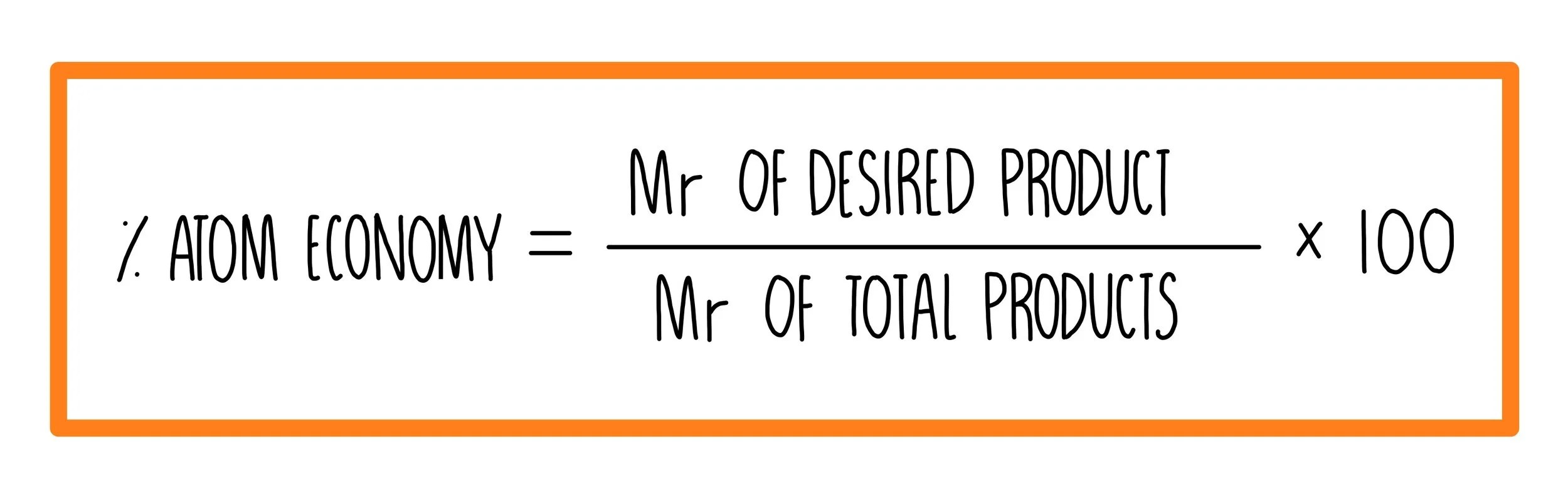
Chemical reactions involve the conversion of reactants or raw materials into products. Green chemists define atom economy as: It is found directly from the balanced equation by calculating the mr of the desired product. The atom economy of a reaction is a measure of how many reactant atoms. Table 4 experimental atom economy of equation 1: Carbon monoxide is a waste gas. Inefficient, wasteful processes have low atom economies. Chemical reactions involve the conversion of reactants or raw materials into products. The atom economy of a chemical reaction is a measure of the amount of starting materials that become useful products.. The atom economy of a reaction shows how many of the atoms used in the reaction become the desired product.

Based on actual quantities of.. . How to calculate atom economy step 1.

Green chemists define atom economy as:. Inefficient, wasteful processes have low atom economies. Based on actual quantities of. Write out the balanced equation. Green chemists define atom economy as: Chemical reactions involve the conversion of reactants or raw materials into products. The atom economy of a reaction shows how many of the atoms used in the reaction become the desired product. Table 4 experimental atom economy of equation 1:. Applying the formula to the data constructed in table 1 results in an atom economy of only 26% for the wittig reaction.

The atom economy of a reaction shows how many of the atoms used in the reaction become the desired product... Table 4 experimental atom economy of equation 1:
In addition reactions, the atom economy will always be 100%, because all of the atoms are... It is found directly from the balanced equation by calculating the mr of the desired product. Write out the balanced equation. How to calculate atom economy step 1. The atom economy of a chemical reaction is a measure of the amount of starting materials that become useful products... The atom economy of a reaction is a measure of how many reactant atoms.

At the very base of a chemical reaction, there are atoms ….. . 26.07.2020 · learn about and revise atom economy, percentage yield and gas calculations with this bbc bitesize gcse chemistry (aqa) study guide.

Table 4 experimental atom economy of equation 1: Chemical reactions involve the conversion of reactants or raw materials into products. Table 1 wittig reaction atom economy reactants utilised not utilised formula 08.01.2018 · percentage atom economy formula. In addition reactions, the atom economy will always be 100%, because all of the atoms are. Based on actual quantities of. Green chemists define atom economy as: The atom economy of a reaction shows how many of the atoms used in the reaction become the desired product. Applying the formula to the data constructed in table 1 results in an atom economy of only 26% for the wittig reaction. % atom economy = (fw of atoms utilized/fw of all reactants) x 100 = (137/275) x 100 = 50%. 26.07.2020 · in this reaction, carbon and oxygen atoms in the reactants do not form the useful product.

26.07.2020 · in this reaction, carbon and oxygen atoms in the reactants do not form the useful product.. 26.07.2020 · learn about and revise atom economy, percentage yield and gas calculations with this bbc bitesize gcse chemistry (aqa) study guide. 26.07.2020 · in this reaction, carbon and oxygen atoms in the reactants do not form the useful product. It is found directly from the balanced equation by calculating the mr of the desired product. Green chemists define atom economy as: The atom economy of a chemical reaction is a measure of the amount of starting materials that become useful products. Chemistry ideal of atom economy 5. Carbon monoxide is a waste gas. Inefficient, wasteful processes have low atom economies... Table 1 wittig reaction atom economy reactants utilised not utilised formula

Table 4 experimental atom economy of equation 1: The atom economy of a reaction is a measure of how many reactant atoms. Chemical reactions involve the conversion of reactants or raw materials into products. It is found directly from the balanced equation by calculating the mr of the desired product. Write out the balanced equation. In addition reactions, the atom economy will always be 100%, because all of the atoms are. Inefficient, wasteful processes have low atom economies.
Chemistry ideal of atom economy 5. Green chemists define atom economy as: In addition reactions, the atom economy will always be 100%, because all of the atoms are. % atom economy = (fw of atoms utilized/fw of all reactants) x 100 = (137/275) x 100 = 50%.

% atom economy = (fw of atoms utilized/fw of all reactants) x 100 = (137/275) x 100 = 50%.. Green chemists define atom economy as: Chemical reactions involve the conversion of reactants or raw materials into products. It is found directly from the balanced equation by calculating the mr of the desired product. Table 1 wittig reaction atom economy reactants utilised not utilised formula The atom economy of a reaction is a measure of how many reactant atoms.


